
Research Overview
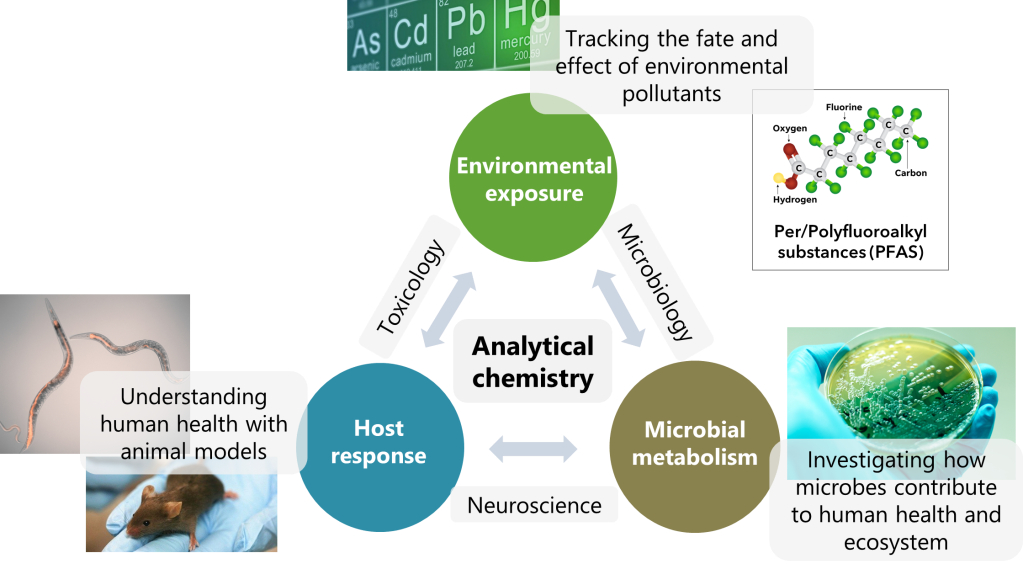
Spatial toxicology research on PFAS-bio interactions
We develop MALDI-MS methods coupled with trapped ion mobility (TIMS) for analysis of per- and polyfluoroalkyl substances (PFAS). We perform MALDI-TIMS-MS imaging to map the spatial distribution of PFAS and link to biological structures and functions. We also measure toxicity response of C. elegans and bacteria after PFAS exposure. Dr. Qiu is is affiliated with the Center for PFAS Research at MSU.
Relevant work:
Reynolds, A. J., Smith, A., Qiu, T. A. Detection, quantification, and isomer differentiation of per- and polyfluoroalkyl substances (PFAS) using MALDI-TOF with trapped ion mobility. Journal of the American Society for Mass Spectrometry, 2024, 35, 2, 317–325. https://doi.org/10.1021/jasms.3c00369
Spatial metabolism in host-microbe interactions
We map the spatial metabolism in host-microbe interactions by visualizing cellular, chemical, and elemental landscapes at gut-lumen interface with microscopy, MALDI-MS imaging, and laser ablation-inductively coupled plasma (LA-ICP)-MS imaging in mouse, C. elegans and other biological systems. We also collaborate with other researchers in comprehensive characterization of host-microbe metabolomics.
Relevant work:
Saitoh, Y., Qiu, T. A. (2025). Dynamics of biofilm-forming Bacillus subtilis in Caenorhabditis elegans gut. Preprint on bioRxiv: doi.org/10.1101/2025.01.26.634914.
Haffner, J. J., Ahn, S. H., Qiu, T. A. (2025). Revealing Spatial Heterogeneity across the Gut Tissue-Lumen Interface through MALDI Mass Spectrometry Imaging. Preprint on bioRxiv: https://www.biorxiv.org/content/10.1101/2025.06.01.657309v1
High-throughput screening for PFAS-bacteria interaction
We develop MALDI-MS-based high-throughput screening methodologies for fast analysis of PFAS-bacteria interactions with minimal sample preparation.
Relevant work: Coming soon!!
Approaches
Mass spectrometry
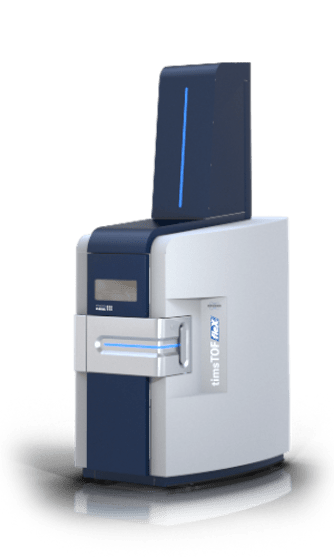
Our lab is equipped with a Bruker timsTOF fleX ESI/MALDI-TIMS-Q-TOF mass spectrometer (left). Matrix-assisted laser desorption/ionization (MALDI)-MS is a laser-based ionization technique with wide applications in MS imaging, high-throughput screening and single cell analysis.
We also utilize the MSU RTSF Mass Spectrometry and Metabolomics Core.
Model animals
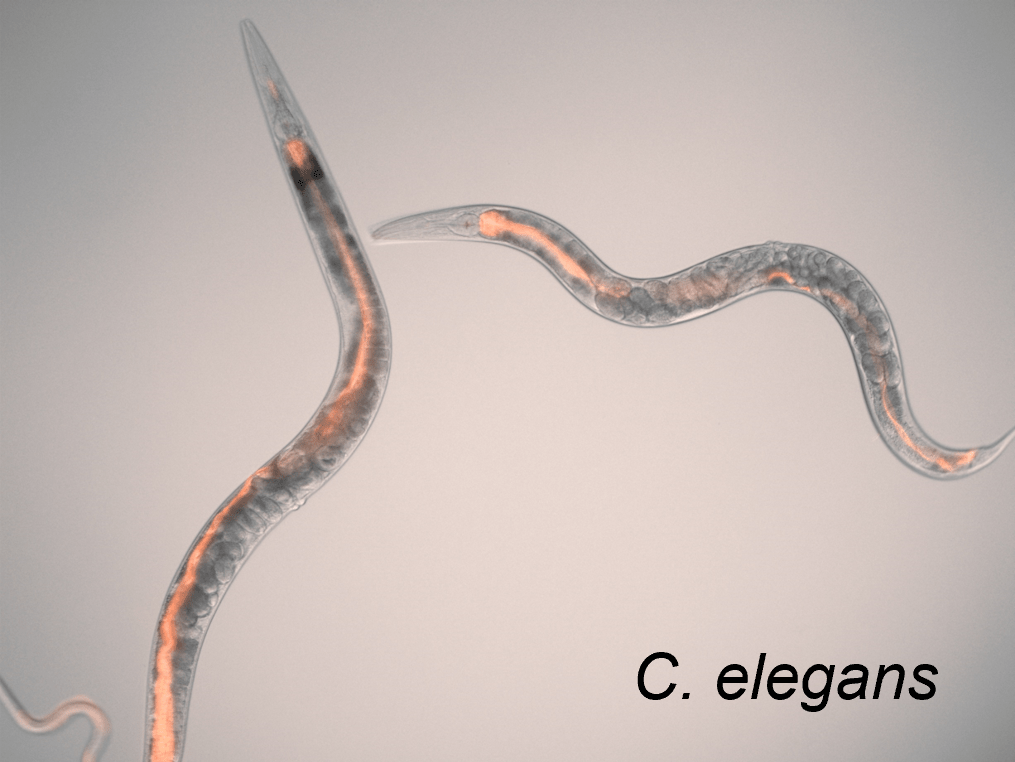
We use the nematode Caenorhabditis elegans (C. elegans) and rodents (mostly mice) as animal models for toxicology and host-microbe research. In collaboration with other researchers, we also work on various model systems from Drosophila, coral to plants.
Click for “why C. elegans“.
Microbiology
We cultivate microbial species for ecotoxicology and with model animals, for host-microbe research.
 Qiu Research Lab